Where to Donate Electronics in UAE: Give Your Old Devices a New Life
There is probably an old phone hiding in a drawer in your home right now.
Maybe it still works, but you upgraded years ago. Maybe there is an old laptop that you stopped using because it became too slow. Perhaps you have a tablet, charger, router or computer that you simply don’t know what to do with.
Throwing it away feels wasteful.
Selling it may not be worth the effort.
But donating it can give that device a completely different future.
An old laptop that feels useless to you could help a student access online lessons. An unused smartphone could help someone stay connected. Even a damaged device may still have value through refurbishment, parts or responsible recycling.
If you’re wondering where to donate electronics in the UAE, there are several options worth considering.
Safety Note
Before donating any phone, laptop, tablet or computer, protect your personal information first. Back up important files, sign out of your accounts and properly erase the device before handing it over whenever possible.
For an official UAE donation route, the Donate Your Own Device (DYOD) initiative provides guidance for donating used devices through Emirates Red Crescent centres. Its official FAQ says that smartphones, tablets, laptops, desktop computers and accessories such as chargers and cables can be donated, including devices that are damaged.
For more practical technology and everyday problem-solving guides, you can also find useful tips here on UAEFIXES.COM.
Where Can You Donate Electronics in the UAE?
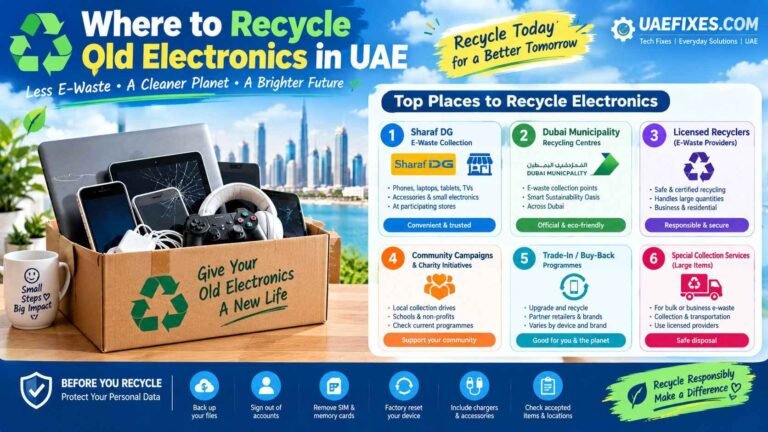
You don’t have to throw an old electronic device into the general rubbish.
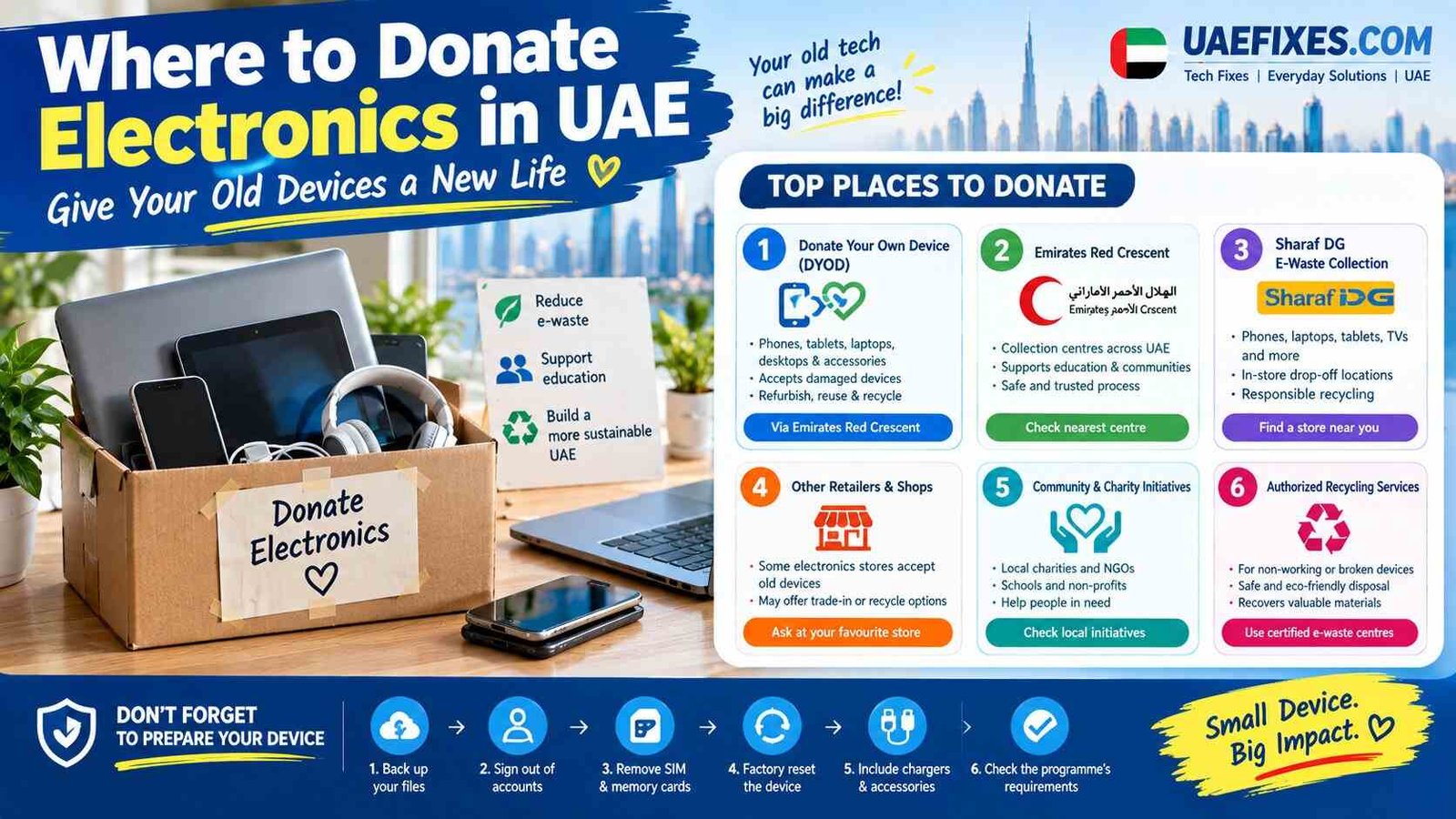
Depending on the condition of your device, you can consider:
- Donate Your Own Device (DYOD)
- Emirates Red Crescent donation centres
- Electronics retailers running e-waste collection drives
- Responsible e-waste recycling services
- Community and charitable initiatives
- Manufacturer or retailer take-back programmes
The best choice depends on whether your device is still usable, needs repair, or is simply ready for recycling.
1. Donate Your Own Device in the UAE
One of the most relevant options for people searching for where to donate used electronics in the UAE is the Donate Your Own Device initiative.
The programme collects old and used technology and aims to give suitable devices a second life by refurbishing them and supporting students and communities that need access to digital education.
According to the initiative’s official FAQ, you can donate:
- Smartphones
- Tablets
- Laptops
- Desktop computers
- Chargers
- Cables
- Other eligible accessories
And importantly, the device does not necessarily have to be in perfect condition. The programme says devices with issues or cosmetic damage can also be accepted.
That means the old laptop sitting in your cupboard because the battery isn’t great may still be worth donating.
2. Donate Through Emirates Red Crescent
Individuals can donate eligible devices through Emirates Red Crescent centres listed by the Donate Your Own Device initiative.
This is particularly useful if you don’t want to sell the device and would rather know that it is being channelled through a recognised humanitarian initiative.
The programme explains that donated devices can go through refurbishment and necessary repairs before being distributed to students in underserved communities. Devices that cannot be usefully refurbished can be directed toward recycling.
So even a device that no longer feels useful to you may not be completely finished.
3. Donate Electronics Through Sharaf DG E-Waste Collection
If your main goal is to keep old electronics out of the rubbish stream, retailer collection programmes can be another convenient option.
Sharaf DG currently operates an e-waste collection initiative in the UAE and says customers can donate electronic waste at its stores. Its programme covers items including old smartphones, laptops, tablets, accessories and other electronic equipment.
This is particularly useful when your device is too old or damaged to realistically give to another person.
Instead of leaving it in a cupboard for another five years, responsible collection gives the material a chance to be recovered or recycled.
4. Donate Old Laptops and Tablets
Laptops and tablets can be among the most meaningful electronics to donate.
Think about how much we use these devices without even noticing:
Schoolwork.
Online courses.
Job applications.
Video calls.
Research.
Communication.
For someone who doesn’t have reliable access to technology, a working laptop can be far more valuable than it looks from your perspective.
The current Donate Your Own Device initiative specifically accepts laptops and tablets and aims to refurbish suitable devices for educational use.
Before donating, include the charger if you still have it.
A laptop without its charger may be much less useful to the next person.
5. Can You Donate an Old Phone?
Yes.
Smartphones are specifically included among the devices accepted through the Donate Your Own Device initiative.
Before handing over your phone:
- Back up your photos and files.
- Move important contacts and messages.
- Sign out of your accounts.
- Remove your SIM card.
- Remove memory cards if applicable.
- Factory reset the device.
- Make sure it is no longer connected to your personal accounts.
Don’t skip the data step simply because you’re donating instead of selling.
Your personal information is still personal information.
6. What About Broken Electronics?
This is where many people make a mistake.
They have a phone with a cracked screen or a laptop that won’t turn on and assume:
“Nobody can use this, so I’ll just throw it away.”
Not necessarily.
The Donate Your Own Device initiative states that damaged devices can be accepted. Devices may be refurbished where possible, while those that cannot be restored can be recycled appropriately.
However, don’t assume every organisation accepts every type of broken electronic equipment.
If the device has a swollen, leaking or severely damaged battery, contact the collection organisation first and ask whether it can safely accept it.
7. Donate Chargers, Cables and Accessories
Don’t automatically ignore the accessories sitting in the same drawer.
Chargers and cables can make donated electronics much more useful.
The DYOD programme specifically lists accessories such as chargers and cables among eligible donation items.
So before you donate an old laptop, check the cupboard for:
- Original charger
- USB cables
- Power adapters
- Mouse
- Keyboard
- Laptop bag
- Compatible accessories
You may be able to donate them together.
8. Donate Old Computers From Your Office
Businesses often have a much bigger electronics problem than households.
An office upgrades its laptops.
Monitors are replaced.
Old desktops sit in storage.
Printers become obsolete.
Networking equipment gets replaced.
Instead of allowing old equipment to pile up, companies can look for structured donation, refurbishment or recycling programmes.
The current Donate Your Own Device campaign also accepts donations from organisations and has been backed by government entities, businesses and educational institutions.
For companies, remember that data security is even more important.
Old office computers may contain customer information, employee records, business documents and confidential files.
A simple delete is not enough.
Use your organisation’s approved data-erasure process before equipment leaves your control.
9. Donate or Recycle? Know the Difference
Not every old electronic device should be given directly to another person.
A simple rule is:
Working or repairable → consider donation.
Broken beyond practical repair → consider responsible e-waste recycling.
For example, an old tablet that still works could potentially help somebody study.
A completely dead device with a damaged battery may be better suited for specialist recycling.
The important thing is not to put electronic waste into ordinary household rubbish simply because it has stopped working.
10. Why Donating Electronics Matters
There is something satisfying about knowing an old device didn’t simply become rubbish.
In 2026, the UAE’s Donate Your Own Device 2.0 campaign has been working toward collecting 100,000 used electronic devices for refurbishment, recycling and distribution to students around the world. The initiative was launched with Emirates Red Crescent and participation from government entities, private organisations and educational institutions.
And the impact is already tangible.
In September 2026, more than 1,500 restored laptops and tablets were distributed to pupils in the UAE through a back-to-school initiative involving The Digital School and partner organisations.
That’s why donating an old device can mean more than simply clearing space at home.
11. Prepare Your Electronics Before Donation
Before you leave your house with a box of old electronics, take a few minutes to prepare everything.
Back up your files
Copy important photos, documents and contacts to a secure location.
Sign out
Remove your Apple, Google, Microsoft and other personal accounts.
Factory reset
Use the manufacturer’s official reset process where appropriate.
Remove SIM and memory cards
Don’t accidentally donate your personal SIM card or microSD card.
Include useful accessories
Add chargers and compatible cables whenever possible.
Clean the device
A quick wipe makes a donated device easier to inspect and prepare for its next use.
Keep important information separate
Don’t leave passwords, notes or personal documents on the device.
12. What Happens to Donated Electronics?
This depends on the programme and the condition of the device.
A working device may be prepared for another user.
A repairable device may be refurbished.
A damaged device may be used for parts or sent for recycling.
The DYOD programme says donated devices undergo refurbishment where needed and that necessary repairs are carried out before suitable devices are distributed to schools and students in underprivileged communities. It also says it has a secure data-erasure process in collaboration with EcycleX.
That means your old device doesn’t necessarily have to end its life with you.
13. Where to Donate Electronics in Dubai
If you’re searching specifically for where to donate electronics in Dubai, start by checking whether your device qualifies for the Donate Your Own Device programme and use its listed Emirates Red Crescent donation centres.
Retail collection programmes can also be convenient. Sharaf DG’s current e-waste initiative allows customers to donate electronic waste at its stores, although its programme has specific store exclusions. Check the current collection information before making the trip.
For bulky or business equipment, contact the relevant programme before transporting everything yourself and confirm what they accept.
14. Where to Donate Electronics in Abu Dhabi
Residents of Abu Dhabi can also use UAE-wide donation initiatives where eligible devices are accepted.
The key is to check the current collection location and accepted-device list before travelling.
Don’t assume that every charity or recycling box accepts every type of electronics.
A five-minute check can save you an unnecessary trip.
What Electronics Can You Donate?
Depending on the programme, commonly accepted items can include:
- Smartphones
- Tablets
- Laptops
- Desktop computers
- Computer accessories
- Chargers
- Cables
- Networking equipment
- Printers
- Other electronic devices
The exact list varies by organisation, so check before donating.
For example, the DYOD FAQ specifically lists smartphones, tablets, laptops, desktops, chargers and cables, and says damaged devices can also be accepted.
What Should You Not Donate?
Don’t hand over dangerous or unsuitable items without checking first.
Be especially careful with:
- Swollen batteries
- Leaking batteries
- Severely damaged lithium batteries
- Items with exposed electrical components
- Non-electronic household rubbish
- Devices containing hazardous materials
If you’re unsure, contact the collection organisation first.
Should You Sell or Donate Your Old Electronics?
This is a personal choice.
If your phone is relatively new and still worth a significant amount, selling it may make financial sense.
If it’s an older device that isn’t worth much but still works, donating it can be much more rewarding.
And if it’s completely broken, responsible recycling may be the better option.
There is no wrong answer.
The important thing is to avoid turning useful electronics into unnecessary waste.
Quick Checklist Before Donating Electronics
Before you hand over an old device:
- Back up your files
- Sign out of personal accounts
- Remove SIM and memory cards
- Factory reset the device
- Include the charger if available
- Check whether the organisation accepts the device
- Check the current drop-off location
- Don’t donate dangerous or leaking batteries
- Keep a record of important business equipment
- Ask about data wiping if you cannot erase the device yourself
Frequently Asked Questions
Where can I donate electronics in the UAE?
You can donate eligible devices through programmes such as Donate Your Own Device, Emirates Red Crescent collection channels and participating electronics e-waste collection programmes. Availability and accepted items can vary, so check the current requirements before visiting.
Can I donate a broken laptop?
Yes, some programmes accept damaged devices. The Donate Your Own Device initiative says smartphones, tablets, laptops and desktops can be donated even when they have issues or cosmetic damage.
Can I donate an old phone?
Yes. Smartphones are among the devices accepted by the Donate Your Own Device initiative. Always erase your personal information before donating.
Can I donate chargers and cables?
Yes, chargers and cables are specifically listed among eligible accessories in the DYOD programme.
Should I factory reset my phone before donating it?
Absolutely. Back up your information first, sign out of your accounts and perform the appropriate factory reset.
Can I donate old computers from my company?
Yes, structured device-donation programmes can accept organisational donations. For business equipment, make sure sensitive company data is securely erased before the equipment leaves your control.
What should I do with electronics that cannot be donated?
Look for an appropriate e-waste recycling programme rather than putting electronic waste into ordinary rubbish. Retail collection initiatives such as Sharaf DG’s e-waste drive provide one option for eligible electronics.
Final Thoughts
Sometimes we hold on to old electronics because throwing them away feels wrong.
And honestly, it should.
That old phone may have been expensive when you bought it. That laptop may have helped you through years of work. That tablet may have been replaced simply because technology moved on.
But “old to you” doesn’t necessarily mean “useless.”
Before you put an unwanted device in a cupboard or send it to the rubbish bin, check whether somebody else could use it.
Back up your memories. Erase your personal information. Find a suitable donation or recycling programme.
Then let the device have another chance.
Your old technology might be someone else’s opportunity.