Where to Recycle Old Electronics in UAE: Safe E-Waste Options
That old phone in your drawer, the laptop that stopped working years ago, or the box of tangled chargers you never use anymore — it may be time to let them go.
But throwing electronics into the regular rubbish bin isn’t the best solution. Phones, computers, tablets, batteries, cables and other electronic equipment can contain materials that need to be handled properly. At the same time, many old devices contain metals and other materials that can be recovered through responsible recycling.
So, where can you recycle old electronics in the UAE?
Whether you are in Dubai, Abu Dhabi, Sharjah or another emirate, there are several ways to deal with unwanted electronics responsibly.
Safety Note: Protect Your Data Before Recycling
Before handing over any phone, laptop, tablet or computer, protect your personal information first.
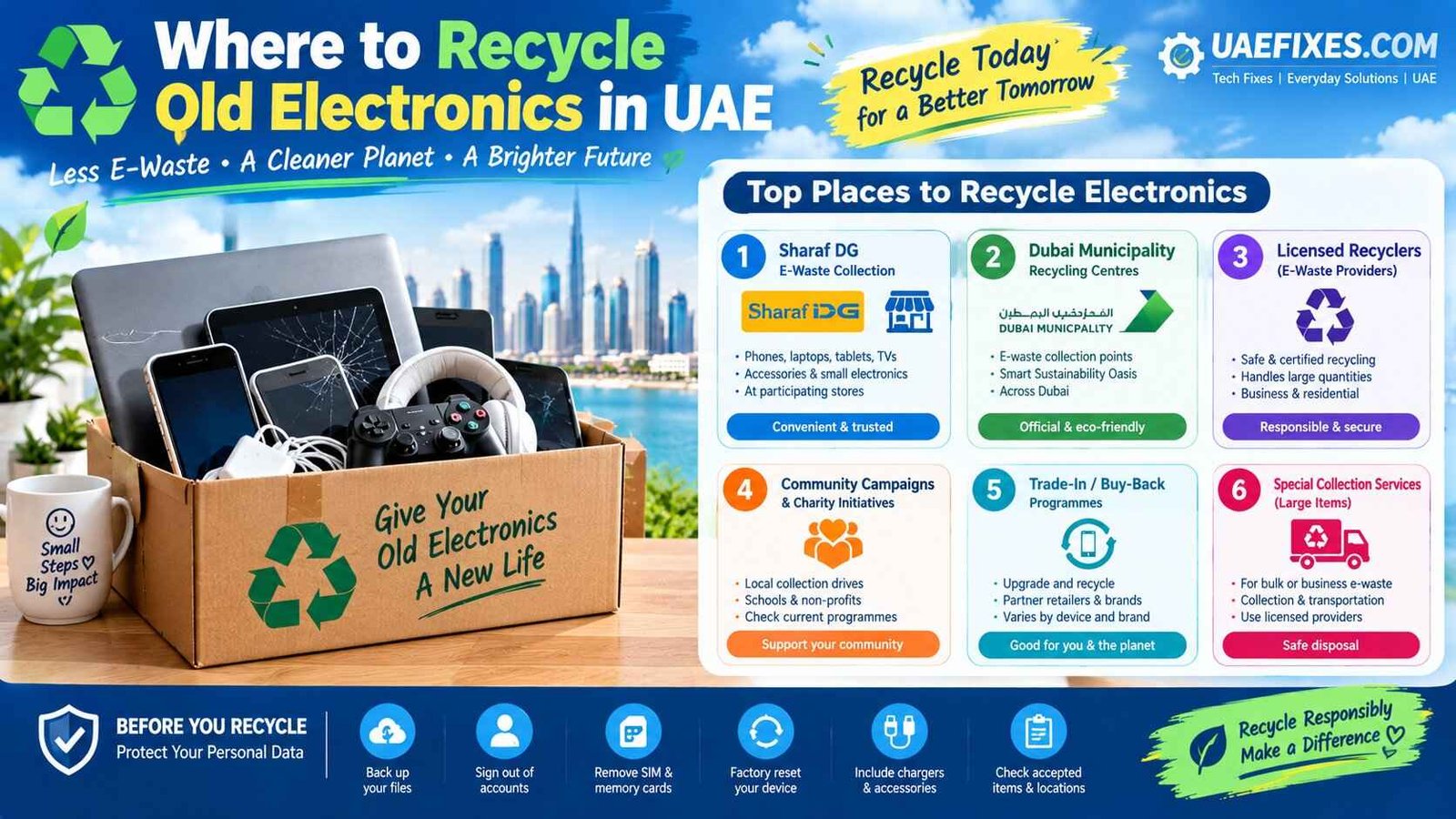
Back up anything you want to keep, sign out of your accounts, remove SIM and memory cards, and perform a proper factory reset where appropriate. For computers and business devices, make sure sensitive files are securely removed.
Also, never open batteries or damaged electronics yourself just to make them easier to recycle. If a battery is swollen, leaking or physically damaged, keep it away from heat and avoid handling it unnecessarily.
UAEFIXES.COM recommends checking the recycling provider’s requirements before dropping off your device, because accepted items and collection arrangements can vary.
Where Can You Recycle Old Electronics in the UAE?
There isn’t just one recycling option. Depending on what you have, you can consider:
- Electronics retailers with e-waste collection
- Official municipal recycling facilities
- Licensed e-waste recyclers
- Dedicated recycling campaigns
- Trade-in or buy-back programmes
- Collection services for larger quantities
The important thing is to send electronics to a proper recycling or collection channel rather than putting them with ordinary household waste.
1. Recycle Electronics at Sharaf DG
One of the easiest options for many UAE residents is an electronics retailer that accepts e-waste.
Sharaf DG currently operates a UAE e-waste collection drive. Its official programme says customers can take electronic waste to Sharaf DG stores, including old smartphones, laptops, tablets, accessories and other electronic items.
This can be particularly convenient if you already have a Sharaf DG store nearby.
However, check the current store information before making a trip because collection arrangements and participating locations can change.
2. Use Dubai Municipality Recycling Facilities
If you live in Dubai, Dubai Municipality provides recycling facilities and sustainability locations across the emirate.
Current Dubai Municipality information lists several Smart Sustainability Oasis locations, including sites around Mirdif, Rashidiya, Nadd Al Hamar, Al Karama, Al Satwa, Al Manara, Al Barsha 2, Al Tawar and other areas.
For electronics, don’t simply assume that every recycling bin accepts every type of electronic device. Check the facility’s accepted materials before taking large or unusual equipment.
For businesses or larger quantities of electronic waste, using an approved waste-management or recycling provider may be more appropriate.
3. Recycle Old Electronics in Abu Dhabi
Abu Dhabi also has systems for responsible handling of waste electrical and electronic equipment.
Waste-management guidance for Abu Dhabi calls for used electrical and electronic equipment to be handled through licensed environmental service providers for recycling.
This is especially important for companies, offices, residential communities and anyone dealing with a large quantity of electronic waste.
If you have several computers, monitors, printers or other equipment to dispose of, contact the relevant local waste-management service or an appropriately licensed recycler instead of leaving the equipment beside general waste containers.
4. Recycle Old Phones
Old phones are among the easiest electronics to recycle.
Before recycling your phone:
- Back up your photos and contacts.
- Sign out of Apple or Google accounts.
- Remove the SIM card.
- Remove the memory card if applicable.
- Turn off device-tracking or activation locks.
- Perform a factory reset.
- Remove cases and accessories if the recycling programme requests it.
Even a phone with a cracked screen or a dead battery may still have recyclable components.
Don’t assume that a phone has no value simply because you can’t use it anymore.
5. Recycle Old Laptops and Computers
Old computers contain valuable materials but can also contain sensitive personal or business information.
Before recycling a laptop or desktop:
Back up your files
Move important documents, photos and other files to your new computer or secure cloud storage.
Sign out of accounts
Remove your Microsoft, Google, Apple and other accounts from the device.
Remove personal information
A normal factory reset may be suitable for some consumer devices, but businesses handling confidential information should follow their organization’s secure data-destruction policy.
Check accessories
Ask the recycler whether they accept:
- Chargers
- Keyboards
- Mice
- Cables
- Docking stations
- Monitors
- Printers
- Computer speakers
You may be able to recycle several items together.
6. What About Broken Electronics?
This is where recycling becomes especially important.
A device doesn’t necessarily need to be working to be recyclable.
Broken phones, damaged laptops, old printers, obsolete routers, keyboards and other electronics may contain materials that can be recovered.
However, damaged batteries are different.
If a lithium-ion battery is swollen, punctured, leaking or unusually hot, don’t put it into a normal recycling box. Don’t crush it, drill it, burn it or attempt to dismantle it.
Contact an appropriate waste or recycling service for guidance.
7. Don’t Forget Chargers and Cables
A drawer full of old chargers can become surprisingly large.
USB cables, power adapters, charging cables, computer cables and other accessories may also be accepted through e-waste collection programmes.
Instead of throwing everything away because you don’t recognize a cable anymore, separate the electronics and ask the collection point whether it accepts them.
If a cable is still working and someone else can use it, reuse or donate it before recycling.
8. What Electronics Can Usually Be Recycled?
Depending on the programme, electronic recycling may include:
- Smartphones
- Tablets
- Laptops
- Desktop computers
- Computer monitors
- Printers
- Keyboards
- Mice
- Routers
- Chargers
- Cables
- Headphones
- Small electronic accessories
- Other electrical and electronic equipment
Acceptance varies, so always check before taking a large appliance or unusual device to a collection point.
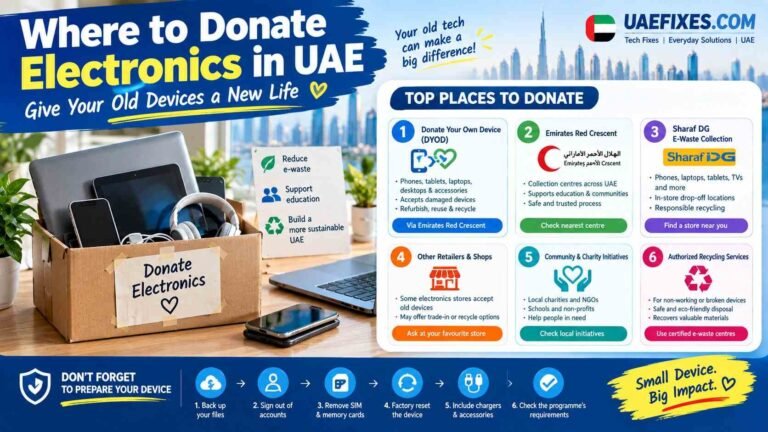
9. Should You Sell, Donate or Recycle?
Not every old electronic device should immediately go to recycling.
Ask yourself three simple questions.
Does it still work?
If yes, selling or donating may give it a longer useful life.
Could someone else use it?
A working laptop, tablet or phone may be more useful to another person than it is sitting unused in your cupboard.
Is it broken or obsolete?
If repair, resale or donation doesn’t make sense, responsible recycling is usually the better option.
Think of it this way:
Working device → Sell or donate
Repairable device → Repair and reuse
Unusable device → Recycle responsibly
10. What Should You Never Do With Old Electronics?
Avoid these common mistakes:
- Don’t throw batteries into ordinary rubbish.
- Don’t burn electronic equipment.
- Don’t dismantle batteries yourself.
- Don’t leave large electronics beside random bins.
- Don’t hand over a device containing your personal information without preparing it.
- Don’t assume every recycling bin accepts every type of e-waste.
- Don’t give damaged batteries to an unverified collector.
A few extra minutes can make the disposal process much safer.
Why Recycling Old Electronics Matters
Electronic waste isn’t just another type of household rubbish.
Phones, computers and other devices contain materials that can potentially be recovered and reused. Responsible recycling can reduce the amount of electronic waste going to landfill while helping recover useful resources.
Dubai Municipality is also working with industry partners to strengthen the safe collection, recycling and recovery of electrical and electronic waste as part of its circular-economy efforts.
That means the old laptop sitting in your cupboard isn’t necessarily worthless.
It may simply have reached the end of its useful life for you.
Quick Checklist Before Recycling Electronics
Before you leave home with your old electronics, check:
☐ Back up important files
☐ Sign out of accounts
☐ Remove SIM and memory cards
☐ Factory reset phones and tablets
☐ Securely remove sensitive business data
☐ Separate damaged batteries
☐ Gather chargers and accessories
☐ Check what the recycler accepts
☐ Use a proper collection point or recycling provider
☐ Keep proof of handover when appropriate
Where to Recycle Old Electronics in Dubai
Dubai residents have several options, including municipal recycling facilities and retailer-based e-waste collection programmes.
Dubai Municipality currently lists multiple Smart Sustainability Oasis recycling locations around the emirate, while Sharaf DG also operates an e-waste collection programme at its stores.
For large quantities or business equipment, look for an appropriately licensed waste-management or recycling provider.
Where to Recycle Old Electronics in Abu Dhabi
In Abu Dhabi, responsible disposal of waste electrical and electronic equipment is supported through the emirate’s waste-management framework.
For larger quantities, businesses and organizations should use licensed environmental service providers rather than informal collection arrangements.
For individual households, check the current local collection arrangements before transporting large electronic equipment.
Recycle or Donate: Which Is Better?
If your old laptop still works, recycling may not be your first choice.
Someone else might be able to use it.
If you have a working phone or tablet, consider donating or selling it first. This keeps the device in use for longer.
But if the device is seriously damaged, outdated, unsafe or impossible to repair, recycling makes more sense.
The goal isn’t simply to get rid of old electronics.
The goal is to give the device the best possible next life.
Frequently Asked Questions
Where can I recycle old electronics in the UAE?
Options include electronics retailers with e-waste programmes, municipal recycling facilities and licensed recycling or waste-management providers. The exact options depend on your emirate and the type of electronics.
Can I recycle an old phone?
Yes. Old smartphones can be handled through suitable e-waste collection programmes. Always erase your personal information and remove your SIM or memory card first.
Can broken electronics be recycled?
Many broken electronic devices can still be recycled. However, damaged or swollen batteries require extra care and should not be placed into ordinary recycling bins.
Can I recycle old chargers and cables?
Many e-waste programmes accept chargers, cables and electronic accessories, but acceptance varies between collection points.
Should I sell or recycle my old laptop?
If it still works and has resale value, selling or donating it may be better. If it is unusable or uneconomical to repair, responsible recycling is usually the better option.
Is it safe to throw electronics in the regular bin?
It is better not to. Electronics and batteries should be handled through appropriate recycling or waste-management channels.
Final Thoughts
That forgotten phone, dead laptop or box of old chargers doesn’t have to end up in the wrong bin.
Before throwing electronics away, take a moment to decide whether they can be sold, donated, reused or recycled.
If recycling is the right choice, use a proper collection point or licensed recycling service and protect your personal data first.
It may take only a few minutes to prepare an old device — but that small decision can help reduce e-waste and recover materials that would otherwise be lost.